HAN ZHU LAB
Stanford Translational Cardio-Oncology Program
Stanford Cardiovascular Institute (CVI)
Division of Cardiovascular Medicine
Department of Medicine, Stanford School of Medicine
Stanford University, Palo Alto, CA


Stanford Translational Cardio-Oncology Program
About the program
The Stanford Translational Cardio-Oncology Program is a multidisciplinary program dedicated to understanding, predicting, and treating cardiovascular complications of cancer therapy, with a growing focus on cardiac inflammation and immune-mediated heart disease. Our mission is to make cancer treatment safer by integrating clinical care, patient-centered research, biomarker discovery, and mechanistic science.
The program brings together expertise across cardiology, oncology, immunology, bioengineering, genomics, and computational biology to study how cancer therapies affect the heart and vascular system. We leverage prospective clinical data, biobanked patient samples, advanced immune profiling, single-cell and spatial multi-omics, plasma-based biomarkers, human iPSC models, and animal models to identify mechanisms of cardiotoxicity and discover new therapeutic strategies.
By building integrated pipelines that connect patient care with translational discovery, we aim to improve early diagnosis, risk stratification, and precision treatment for patients with cardio-oncology and inflammatory cardiovascular diseases. Our long-term goal is to develop biomarker-driven and mechanism-based approaches that allow patients to receive life-saving cancer therapies while protecting cardiovascular health.
Program Vision
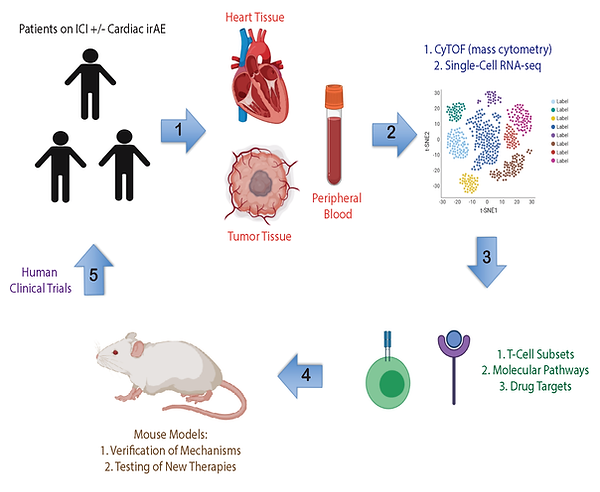
The Stanford Translational Cardio-Oncology Program aims to advance precision medicine approaches for cardiovascular complications of cancer therapy and immune-mediated inflammatory heart disease by integrating patient-centered clinical research with translational science and emerging technologies. Through multidisciplinary collaboration across cardiology, oncology, immunology, genomics, and bioengineering, we seek to develop novel biomarkers, mechanistic insights, and targeted therapies using advanced multi-omics, human iPSC disease modeling, and bench-to-bedside investigation to improve cardiovascular outcomes and enable patients to safely benefit from life-saving cancer therapies.
Monthly Cardio-Oncology Seminar Series
The monthly Stanford Cardio-Oncology seminar series is a multi-disciplinary conference that focuses on one topic a month. The goal is to educate attendees about the newest cutting-edge clinical and research knowledge in the field of cardio-oncology. Conferences feature speakers from both inside and outside Stanford, and provides a vibrant forum to form potential collaborations to form innovative solutions to patient-oriented problems in the field. The seminar also provides attendees and especially trainees opportunities to network with leaders in the field. Past conferences have focused on a variety of topics, including anthracycline-induced cardiotoxicity, tyrosine kinase inhibitor cardiotoxicity, immune checkpoint inhibitor myocarditis, clonal hematopoiesis of indeterminate potential (CHIP), building a multi-disciplinary cardio-oncology program, and challenging and difficult clinical case presentations.
The conference occurs on one Tuesday of every month from 4-5 pm by Zoom. For more details and Zoom link, contact CVI faculty members, Drs. Han Zhu and Paul Cheng.

Get Involved
We are deeply grateful for the patients, families, foundations, and community supporters who help advance our research mission. Philanthropic support can make an impact in many ways — from funding high-risk, high-reward scientific projects and supporting trainees and fellows, to enabling patient-centered translational studies and expanding clinical research infrastructure in cardio-immunology and inflammatory heart disease. We welcome opportunities to connect with individuals and organizations interested in supporting innovative cardiovascular and cancer immunology research at Stanford.
Let’s Work Together
Get in touch so we can start working together.

